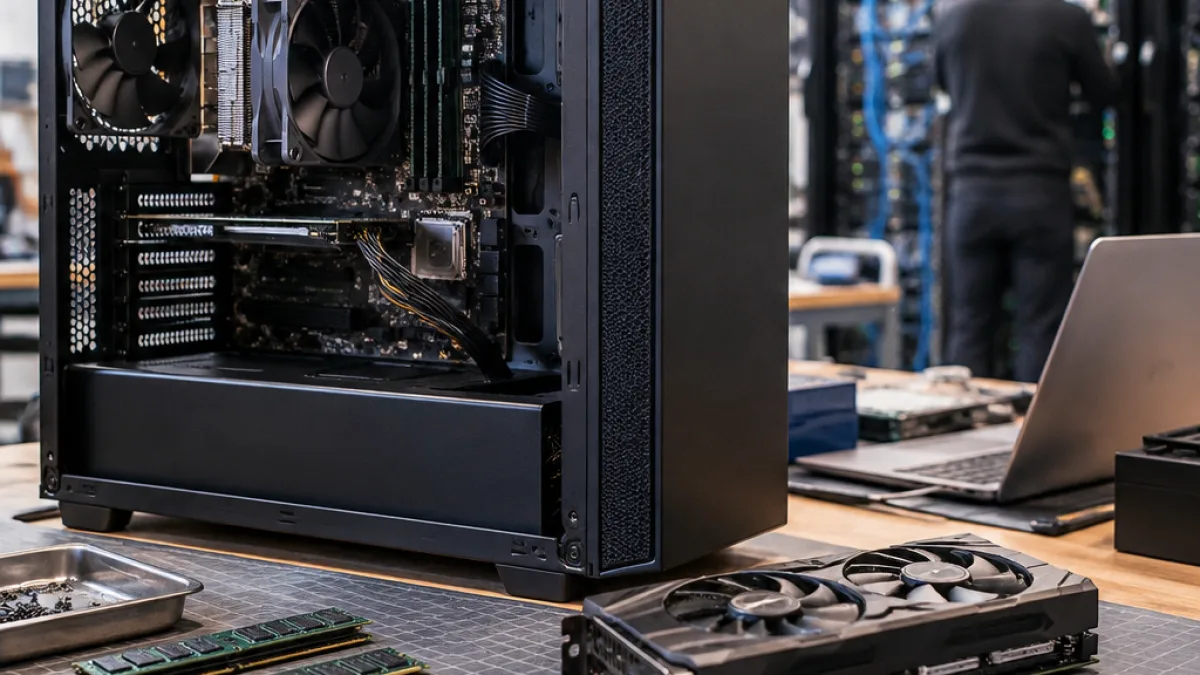
OpenAI CEO Sam Altman said consumer computers are using an inefficient share of the world’s limited DRAM supply, arguing that more memory should be concentrated in cloud data centers serving artificial intelligence models.
Altman made the comments in an interview with YouTuber Cheeky Pint as the AI industry continues to compete for computing capacity and memory. He said the market is not directing every available DRAM wafer toward data centers, where cloud providers can manage memory across large-scale systems.
“From a global allocation perspective, actually, it's quite terrible to have everybody have a bunch of the world's limited supply of DRAM sitting in their own computer, and being used maybe 5% of the time. Like, you want maximum utilization in the cloud if you're trying to deal with this very supply constrained environment. And somehow many people's intuition is the opposite of that.” — Sam Altman
Memory demand reaches gaming hardware
DRAM is used in nearly every modern consumer computer and is required for ordinary PC workloads, not only for locally run AI systems. Gaming PCs depend on system memory, while consoles and other gaming devices also use memory components. The continuing competition for supply has contributed to higher costs across gaming hardware, according to the discussion.
The effects have also appeared in the availability of individual products. The RTX 5080 recently disappeared from Nvidia’s marketplace, while the RTX 5090 was described as nearly discontinued weeks earlier. The source also linked the memory shortage to an official price increase for the PS5 Pro in March and to used units later reaching $1,399.
- DRAM is used by gaming PCs and other consumer electronics as well as AI data centers.
- Altman said cloud systems can use pooled memory more efficiently than individual consumer computers.
- Gaming hardware availability and pricing have been affected as demand for memory rises.
Altman’s position reflects OpenAI’s focus on expanding the data-center capacity needed to run large AI models. He said the current supply-constrained environment would benefit from maximizing utilization in the cloud rather than leaving memory installed in individual machines that may be active only part of the time.
Samsung’s latest earnings call also identified AI-related demand as a factor in the memory market. The company’s comments were cited as evidence that pressure on RAM supplies is expected to continue into next year, keeping the issue relevant for PC builders and manufacturers of gaming hardware.