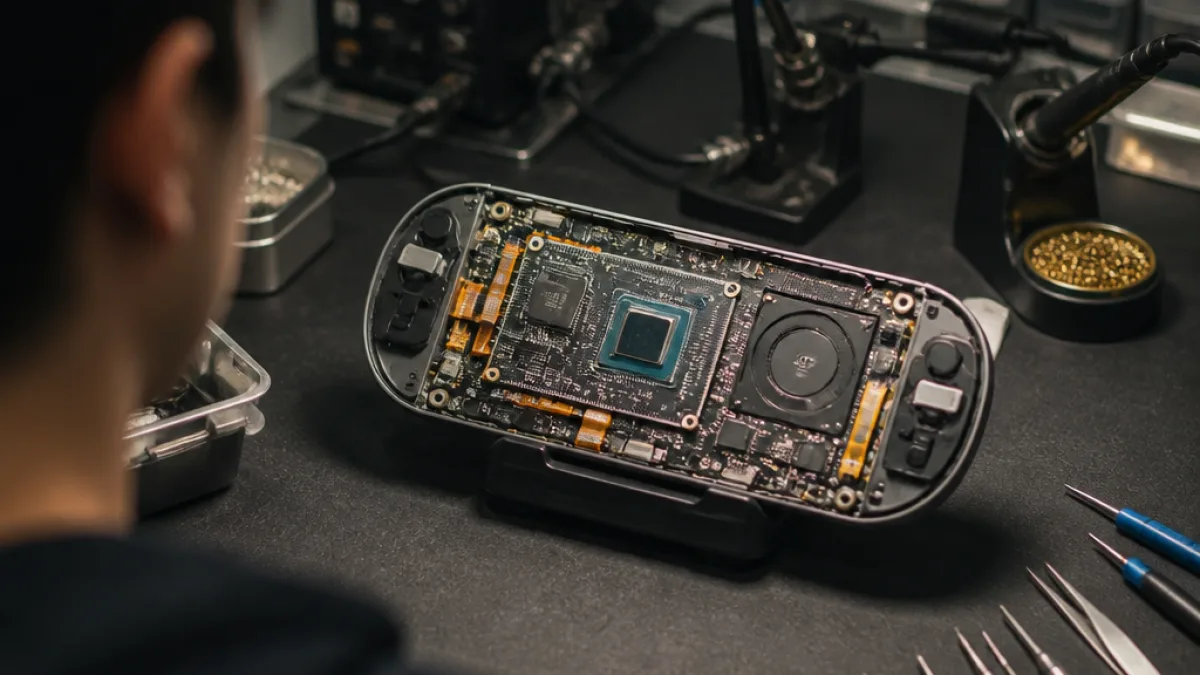
Sony appears to have an “exclusive of sorts” with AMD for the RDNA 5 graphics architecture on a next-generation PlayStation handheld, Digital Foundry’s Richard Leadbetter said on the outlet’s Patreon-only DF Direct podcast Oct. 26.
“there's been some behind-the-scenes discussion that Sony has an exclusive of sorts with AMD for RDNA 5 for handheld,” said Richard Leadbetter of Digital Foundry.
What was reported
Leadbetter’s comment, made during a Patreon-only episode of Digital Foundry Direct and reported widely by gaming outlets, frames the situation as an industry arrangement driven by AMD’s engineering choices rather than a conventional, legally binding exclusivity contract. The reporting says AMD is concentrating semi‑custom engineering resources on partners who can meet high minimum order requirements for bespoke handheld APUs.
Several outlets that followed the Digital Foundry remarks noted parallels with earlier reporting and rumors that AMD sought large volume commitments — figures cited elsewhere in the press include a suggested minimum commitment of 10 million units for a custom APU — as a condition for developing dedicated silicon for a platform. That account has been disputed by some industry writers, and those disputes are part of the public coverage of the conversation.
Context from recent hardware and platform moves
- Sony and AMD collaboration: The companies have worked together on technology projects in recent years, including an initiative called Project Amethyst that contributed to PlayStation platform features such as PSSR 2 on PS5 Pro and FidelityFX Super Resolution 4.1 for PC and Xbox, according to reporting.
- Competitors: Microsoft’s reported Project Helix handheld plans and Valve’s Steam Deck follow-ups were cited in coverage. Fortune has reported that Microsoft plans a handheld for holiday 2027 as part of Project Helix, and AMD has publicly teased that FSR Diamond would launch with Project Helix.
- PC handheld chips: Coverage also referenced Intel’s Panther Lake handheld chip, shown at Computex 2026, and the current AMD Ryzen Z2 Extreme APU, which uses an RDNA 3.5 iGPU, as existing mobile options in the handheld market.
The combined coverage frames the claim about RDNA 5 availability on a PlayStation handheld as a product of AMD’s allocation of semi‑custom silicon work and ordering economics rather than a single-statement exclusivity agreement signed in public.
What sources say and what was not claimed
- Digital Foundry’s Leadbetter characterized the situation as behind‑the‑scenes discussions and used the phrase “exclusive of sorts.”
- Outlets summarizing the discussion have noted industry rumors that custom APUs for other handheld makers could be impractical without similarly large volume commitments; some of those rumors have been questioned by other writers.
The reporting does not include an official statement from AMD or Sony confirming an exclusivity contract, nor does it provide a publicly released technical specification for any PlayStation handheld APU. Journalistic accounts attribute the claim to Leadbetter’s presentation on the Patreon episode and to related industry reporting about AMD’s engineering approach and partner economics.
Publishers, platform holders and chip vendors have been reducing public disclosure of early hardware negotiations, and several recent stories have described a mix of confirmed collaborations and speculative or source‑dependent reporting about future handheld hardware. The companies named in the coverage have previously collaborated on PlayStation platform features and graphics toolsets, and those prior technical partnerships are part of the factual background cited by the reporting.