Haz Studio, an independent developer based in South Korea, is releasing a free demo of Crawlgan on Steam on Friday, Nov. 13. The studio’s first PC game is a turn-based dungeon crawler that combines roguelike runs, card-based abilities and battles on a small grid.
Haz Studio has also published a trailer for the game. The full release is planned for the first half of 2027, while the Steam listing currently gives the broader release window as 2027.
Combat built around enemy intentions
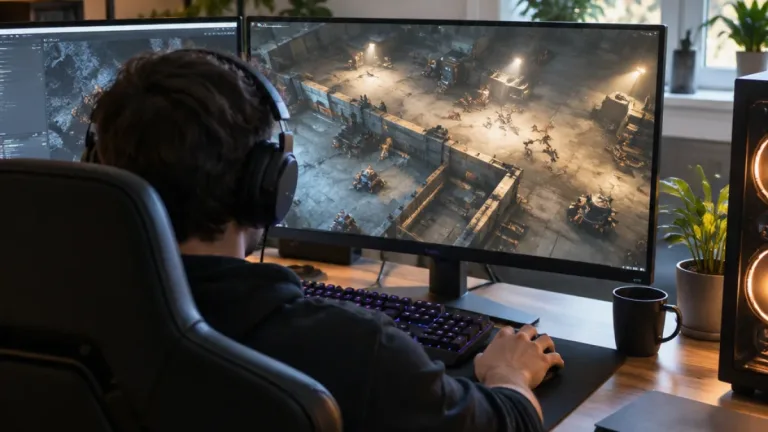
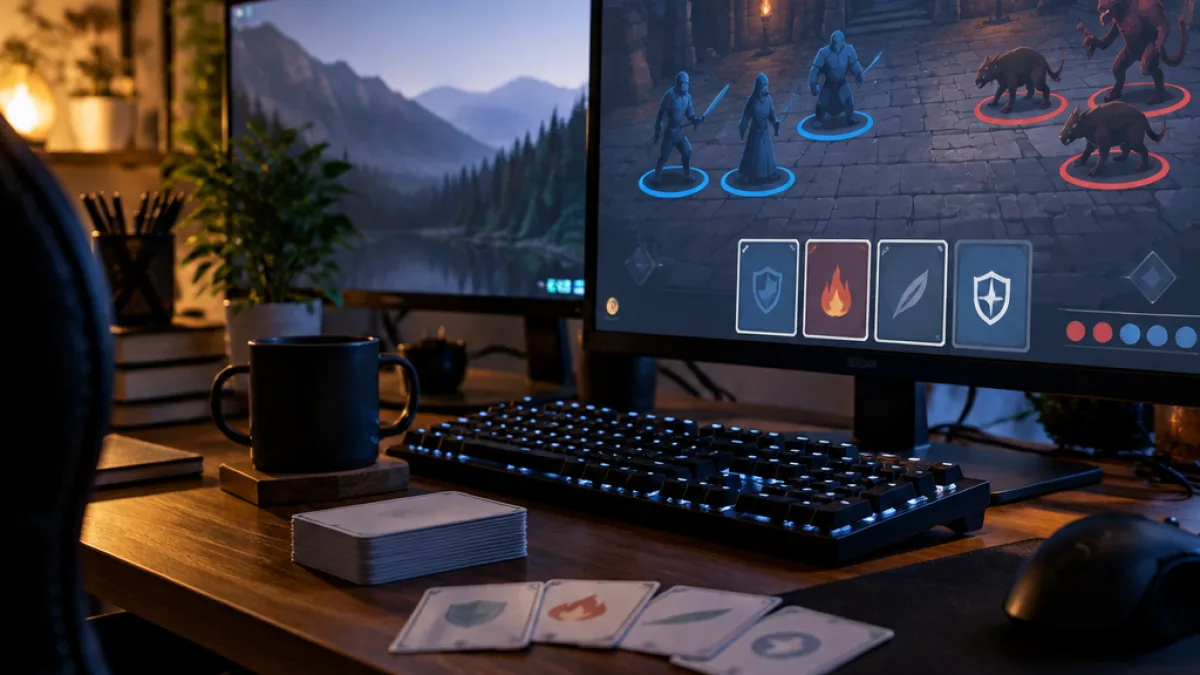
Crawlgan’s combat uses a telegraph system to show what enemies intend to do on their next turn. Attack and movement indicators appear on the floor, allowing players to decide how to spend three action points between moving and playing cards.
Position affects how cards work, so the same ability can produce a different result depending on where the player is standing. Dodging an attack can also redirect it into another monster. That creates a risk in avoiding damage: enemies can become stronger when they defeat one another or consume Thalassium left behind by a fallen creature.
- The demo follows the Warrior through the Ashen Barrow and Bronze Catacomb areas.
- Players can push or pull enemies to change their positions on the battlefield.
- The game’s starting classes are Warrior, Mage and Rogue.
Class progression takes place during a run at an Altar of Calling. The Warrior can advance to Gladiator, Guardian or Berserker. The Mage can become a Pyromancer, Cryomancer or Stormcaller, while the Rogue can specialize as an Assassin, Poisoner or Daredevil. Each advanced class has its own cards.
“We prepared a range of systems we could try because this is an indie game, so that they feel familiar and new at the same time,” — Lee Changhun, CEO of Haz Studio
Planned content
The demo lets players complete the Warrior’s route through two areas. Haz Studio’s planned version of Crawlgan will include 12 classes, 89 cards, 80 monsters and four dungeons, each with five difficulty levels. An endless dungeon is also planned, along with support for 13 languages.
The studio describes the game as its first PC project. Its design centers on building a deck during each run while reading enemy intentions and using the grid to control encounters. Players who are defeated will restart their roguelike run, with the available cards and class choices shaping subsequent attempts.